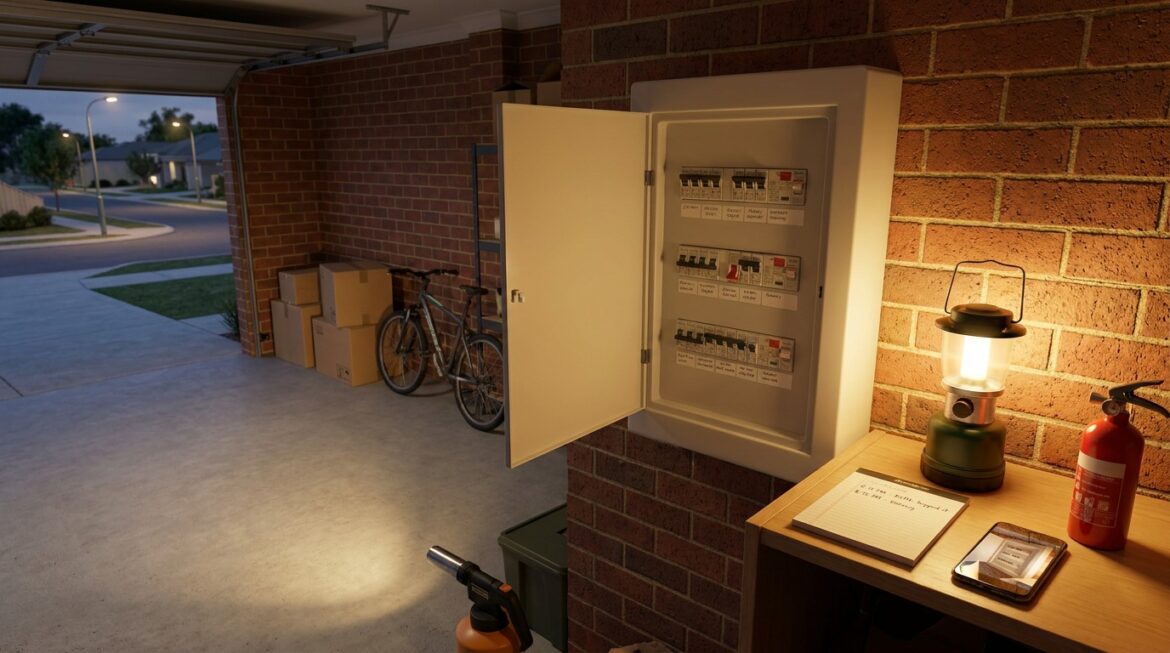
What to Do Before an Emergency Electrician Arrives
An electrical fault doesn’t give you time to think. Your job before help arrives isn’t to fix wires or guess at the cause. It’s to keep people safe while giving the electrician a clear run at the fault.
Decide if this is a life-safety event
Smoke or sparks mean you need to act now. A sharp burning smell from a power point or switchboard demands the same response. You don’t need to see flames for the risk to be real.
Contractors see plenty of callouts where the fault is far less dramatic. A breaker trips when the kettle and heater run together. Lights flicker once and then hold steady. Those faults allow for a calmer response.
Ask two quick questions: is anyone hurt or shocked, and is there heat or smoke you can see or smell? If the answer to either is yes, treat it as urgent and move to life-safety steps first.
If no one is hurt and there’s no sign of heat, you’ve got room to check a little further. Note what stopped working and when it happened. That detail is more helpful than you might expect. Think back to what was on just before the trip. A tripped circuit after you started the dryer or a workshop tool points to overload rather than a failure in the walls.
Write down the time and what you heard. A loud bang at the switchboard tells a different story from a quiet trip with no smell, and that difference shapes what the electrician checks first. Don’t reset anything yet. Observe what has happened and keep people away from the suspect point.
Turn off power only if you can do it safely
The main switch is the single point that cuts power to most of the home. If you can reach the switchboard without stepping through water or touching anything that looks burnt, turning that switch off is the most useful thing you can do. Stand to one side and use one hand. Keep your face turned away.
Don’t touch the board at all if you hear arcing or crackling inside it. Stay clear if the cover feels hot or you smell strong burning near the door. Water and electricity don’t mix, so don’t approach if the floor around the board is wet or rain has blown into an outdoor box.
Older switchboards in established Perth suburbs still use ceramic fuses instead of modern breakers. You can’t simply flick those back on. Don’t pull fuses or poke at fuse wire. Turn the main switch off and leave everything else for the electrician.
Safety switches provide another layer of protection. An RCD or safety switch trips when it senses leakage to earth, which often means a faulty appliance or damp connection. If one RCD has tripped and the board looks and smells normal, you can try one reset. If it holds, you’ve narrowed the fault. If it trips again straight away, leave it tripped and don’t force it.
Put life safety first for fire and shock
Electrical fire and electrical shock outrank every other concern. Call 000 immediately if there are flames, or if someone can’t let go of an appliance or has collapsed near a power point. Get everyone out of the room, then close the door behind you to slow the spread of smoke.
Don’t go back inside for phones or pets once you’re out.
For a small electrical fire that you can address from a safe distance, use only a dry powder or CO2 extinguisher. Never use water on an electrical fire. Water conducts current and will make the situation far worse. If the extinguisher doesn’t put it out within seconds, leave the home and wait outside for emergency crews.
Shock requires a different response. Don’t touch the person while they’re still in contact with the source. Turn off the main switch first if you can do so without putting yourself at risk. Pull the plug or switch off the circuit only if the board is safe to touch.
Once the person is clear of the source, start DRSABCD. Check for danger and response, then send someone to call 000. Open the airway and check breathing. Start CPR if there’s no normal breathing and you know how. Burns from shock can look small on the skin while the tissue underneath is damaged, so seek medical review even when the person says they feel fine.
Electrical faults are responsible for approximately 40% of house fires in Australia (Energy Safe Victoria). That figure is a reminder to treat heat and unusual smells as warnings rather than harmless quirks.
Check for a street-wide blackout before you book a callout
Not every loss of power needs an electrician. Storm-season winds and network faults can cut power to whole streets in Perth. Step outside and look at the streetlights and neighbouring homes. If the whole area is dark, it’s likely to be a network outage.
In that case, unplug sensitive electronics and leave one light switched on so you know when the supply returns. Keep the fridge shut. There’s no fault inside your home to fix, so an emergency electrical callout won’t help.
If your home is the only one dark, the fault is likely to be inside your boundary. Check the switchboard from a safe position and note which breaker or safety switch is off. Once you have isolated the power and confirmed the issue is not a neighbourhood blackout, your next call should be to a licensed electrician.
When you call an Emergency Electrician Perth, have your address and a callback number ready. Describe what you see and smell in plain terms. Mention whether anyone received a shock or there is active burning. That information lets the dispatcher grade the job and tell you whether to stay outside until the van arrives.
Leave the wiring alone and collect details instead
In Western Australia, only a licensed electrician can do electrical work. That requirement is about more than paperwork. Unlicensed work is illegal, and it puts homes at risk because loose terminations and incorrect cable sizes can overheat behind walls. Even a power point swap that looks simple must wait.
Wiring in Perth homes is meant to meet AS/NZS 3000. Only someone with a WA electrical licence and the right test gear can confirm the installation still meets that standard after a fault. Your role is to provide clear information rather than attempt a repair.
Start with the breaker. Record which circuit tripped, using the exact label shown on the board. Kitchen power and light circuits are labelled on many boards. Note whether the breaker re-trips instantly or holds for a while before it goes again.
Track the smell and where it is strongest. A smell that is strong at one power point and faint elsewhere may indicate a local issue. If it follows a heater from room to room, the appliance may be involved. A widespread smell points towards the switchboard or mains.
List what was running, including heaters and kettles. Note the EV charger and pool pump if you have them. An EV charger on a dedicated circuit that keeps tripping often signals overload or a developing fault in that circuit rather than a supply problem. That one line can save twenty minutes of hunting.
Take phone photos of the switchboard with the labels visible. Don’t open covers or remove panels to get a better view. Photos taken from outside the closed door are enough.
Get the switchboard and home ready for fast work
Time on site costs money, and clear access can reduce that time. Move boxes and bikes away from the switchboard. Pull shelving forward so the door can open fully. Aim for a metre of clear space in front of the board, with dry footing underneath it.
Light the area. If the home is dark, set up a torch on a shelf or use a camping light. Don’t rely on a phone flash while you hold the door. The electrician needs both hands free for testing.
Secure animals in another room because dogs may crowd a stranger carrying tools, while cats can slip through an open front door at night. Keep children away from the work zone as well. A quiet hallway lets the electrician hear arcing and concentrate on readings.
Find your keys to side gates and meter boxes. In many Perth homes, the switchboard sits outside or in a garage that visitors can’t easily find. Meet the electrician at the door and walk them directly to the board. Show them your notes and photos first.
Unplug the suspect appliance but leave it in place rather than throwing it out. The electrician may want to test the appliance or check insulation resistance on that circuit. If water has entered a power point or light fitting, keep the circuit off and keep people clear. Wet gear can track current to touchable metal.
Understand solar, costs and what happens next
Perth homes often have rooftop solar, which changes the safety picture. Panels stay live in daylight, and parts of the inverter system can remain energised even with the main switch off. Don’t touch the panels or open the inverter. Stay back from solar and battery cabinets, and tell the electrician you have solar PV on the roof.
Solar isolation is never a DIY task. It requires the correct sequence and suitable test gear. Note any warning lights on the inverter without touching it. If you smell burning near the inverter or battery unit, keep clear and treat it like any other electrical fire risk.
Big loads deserve a mention too. Ducted air and workshop gear can mask a weak connection until a hot evening pushes them hard. If the fault lines up with aircon start-up or EV charging, tell the electrician. That pattern points towards load and heat rather than a random failure.
Ask about money before work starts. An emergency callout usually combines a callout fee with labour charged from arrival. Night and weekend rates are higher than daytime service rates. When you speak with an Emergency Electrician in Perth, ask what the fee covers and when the clock starts. Most on-call electricians will make the home safe first, then quote for the permanent repair.
That first fix may be temporary. A burnt breaker may be replaced to restore safe supply while a full board upgrade waits for daylight and parts. Keep the invoice and test notes because they will help at the next visit and prove the work was completed by a licensed electrician.
You don’t need to diagnose the fault. Focus on containing it, recording what happened and handing over a safe workspace. Doing those jobs properly helps the electrician work faster and keeps everyone in the home safer.
Keep people away from heat and water, make sure the board remains accessible and keep your notes short and factual. The electrician will take it from there.